Finding a New Way to Listen: Podcasts in the Classroom

The Art (and Science) of Listening
In the words of Jan Burkins and Kari Yates, authors of Shifting the Balance, "Reading comprehension actually involves translating the words on the page into spoken language and "listening to them" either by saying them aloud or saying them in our heads." What Jan and Kari are trying to explain here and within their chapter on comprehension, is that listening comprehension is the gateway to learning how to read and successfully comprehend what we are reading. The more children hear language being spoken as they are younger, the more they can understand that language, imitate it and thus translate it to written language. Listening comprehension becomes especially important in school as children get older, as many times when students are having a problem with their reading comprehension over grade three, it is at times linked to problems with their listening comprehension.
Yet, we are not just born excellent listeners, this is a skill that we must work on and fine tune. Podcasts allow for this work to be done in an engaging and motivating way. Podcasts allow for the integration of both listening and reading and children are able to create their own pictures in their minds about what is being said.
So, Why Podcasts?
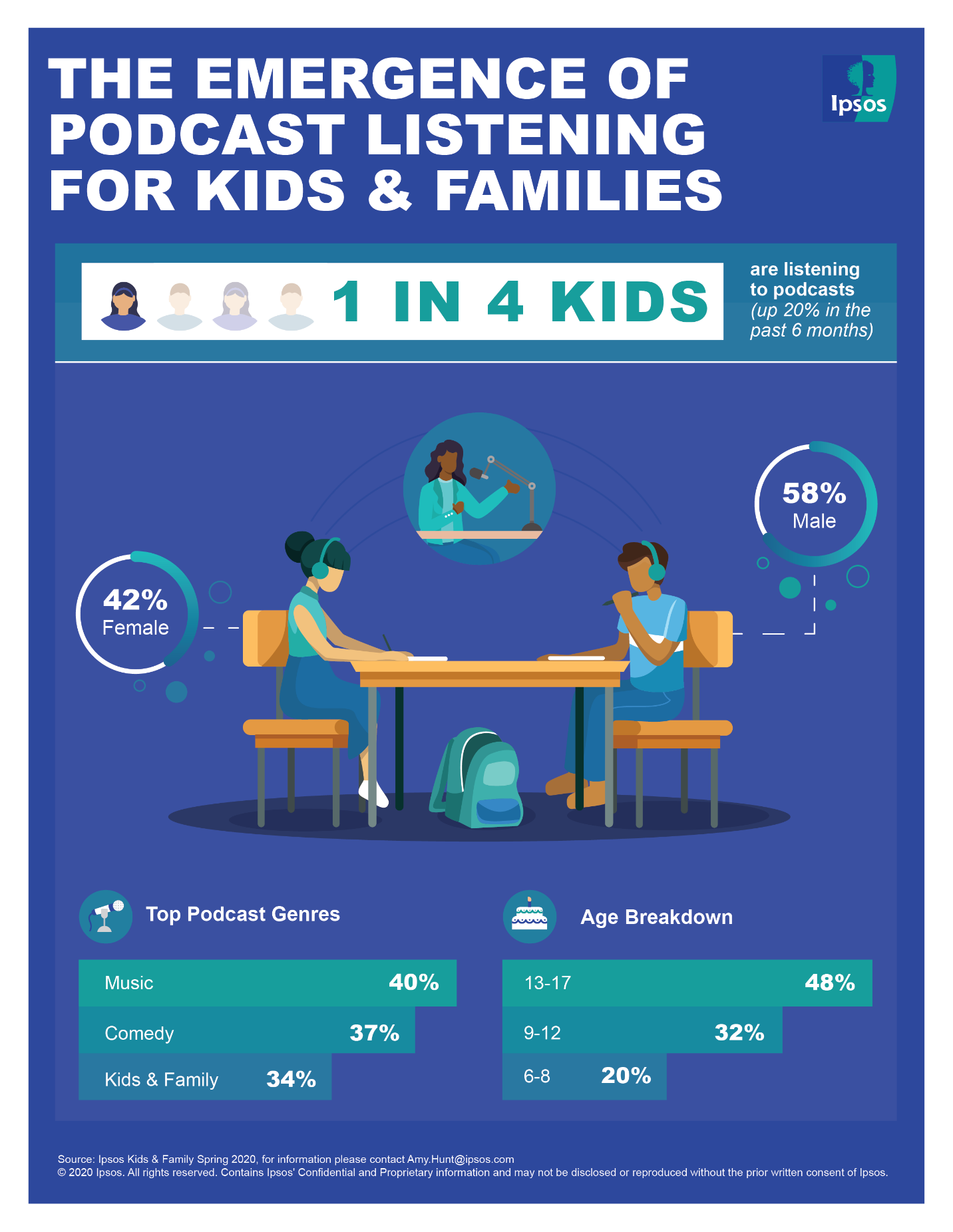
Kids are interested in podcasts! According to IPSOS, a global market research firm, one in four children already listen to podcasts. This makes it a seamless integration into any classroom.
Podcasts are portable, meaning you are not ties down to one device. In addition, this allows for students to be able to multitask. They can listen to an episode of a podcast while sketch-noting what they are listening to, or jotting down interesting and important facts they are learning.
One of the common core standards for all grades includes listening comprehension, even if you work in a state where the CCSS are not adopted, there is still a form of listening that has become a part of most state standards. Also, many state tests have a listening comprehension component. Listening to podcasts allows for students to work on their listening "muscles" and build their stamina.
Differentiation is also huge. For English Language Learners who may not have a lot of access to the English language at home, podcasts allow for these students to listen at the same access point of their peers. They can read a transcript of a podcast while listening to learn how different words should sound. Not to mention, they can have the opportunity to choose what is interesting to them, meaning more engagement.
And most importantly...they are free!
Time to Listen
You may have listened to podcasts though Spotify or Apple Podcasts before, but know that because there are all types of podcasts out in the world, you can't just send your students there, so where do you send them?
Below are some student and teacher friendly platforms for you to look through:
This is a non-profit platform that has a compilation of over 130 different podcasts for kids. The podcasts are arranged by age group, interest or by curated playlists, which makes it easier to find the ones that are appropriate for your classroom! In addition, there is Kids Listen University that has podcast-based lessons you can integrate into your classroom.
Here are some popular podcasts among students:
But Why?
Tumble Science
Kid Nuz
Wow in the World
Book Clubs for Kids

Now, keep calm and listen on!


Podcasts are a great way to incorporate technology into listening comprehension. I agree that podcasts can be beneficial for engagement because students can choose topics that interest them. Listening comprehension is an important skill for students to master and practicing with podcasts that interest them will help them stay focused and become successful quicker. Podcasts also often have transcripts which can be useful for differentiation. I think podcasts are a great way to keep learning relevant for students since there are so many of them on so many different topics.
ReplyDelete